

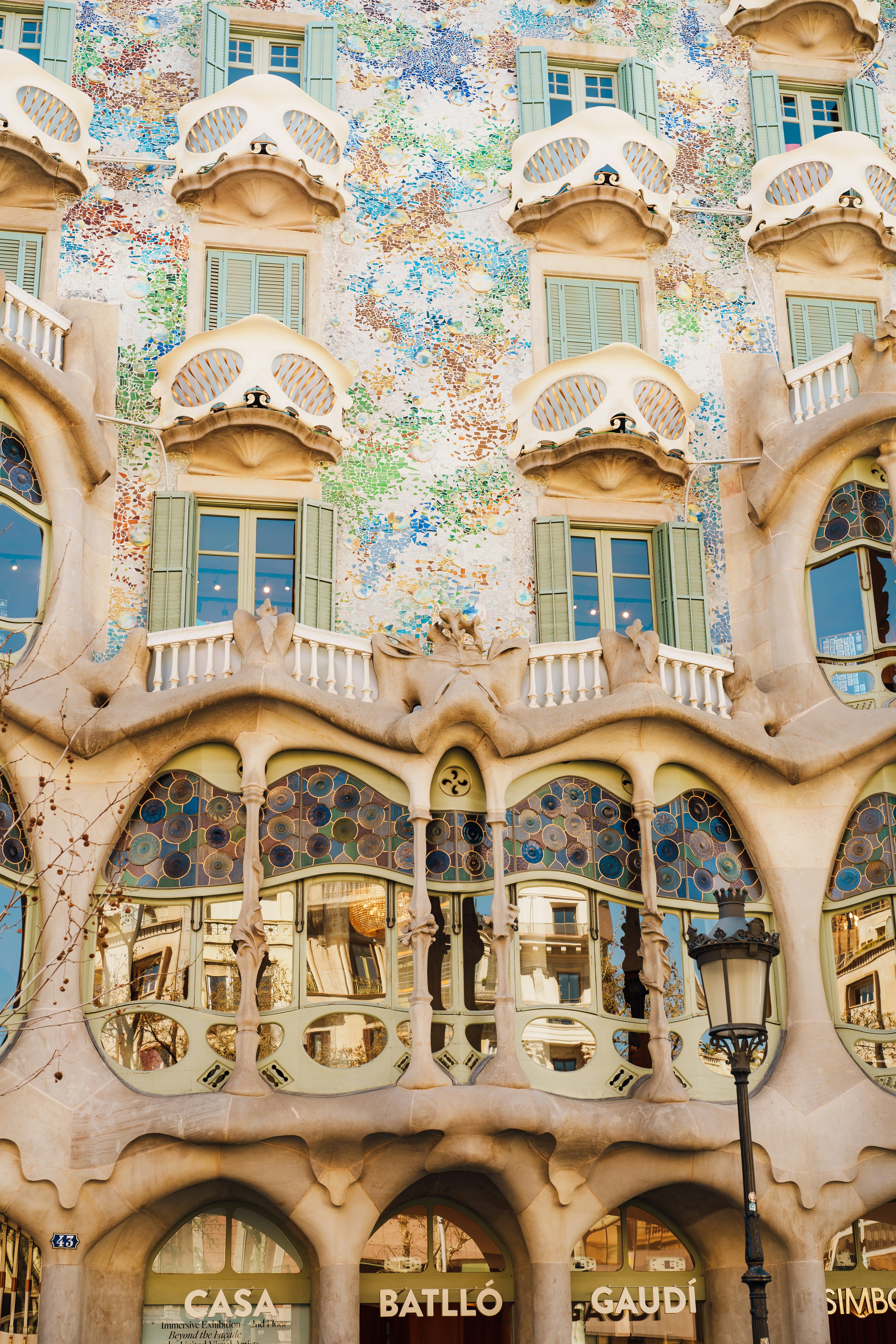
Visiting Barcelona in 2015, the same year my doctoral programme began, I found myself standing in front of Gaudí’s work and recognising something I had not yet found language for. His structures are simultaneously the product of rigorous mathematical and natural science and of an aesthetic vision that could not have been produced by calculation alone. The art and science of human development is not so different. Freud and Jung were not opposing camps but two orientations toward the same irreducible mystery. Christopher Bollas’s creative unconscious is itself both a scientific claim about how the psyche works and an aesthetic sensibility about how to attend to it. That is the intersection I have begun to appreciate.
My dominant formation was in the practice world with twenty years of working inside organisations in OD and Learning roles. This gave me an internalised understanding of how organisations actually work, what they reward, what they resist, and what finally lands as useful to a leader navigating real complexity. Practice was and remains my primary home. Scholarship came later, not as a replacement for that grounding but as a way of bringing rigour, language, and a more conscious epistemological awareness to what I was already doing. The doctoral programme was the most sustained version of that turn toward scholarship and it changed not what I valued but how I could account for it.
For years I tried to resolve the tensions I experienced in my practice of coaching leaders - rigorous and relational, evidence-based and depth-oriented, measurable and mysterious, the individual and their organisation. Eventually I stopped trying to settle them and began working with them instead. That organisational frame has remained a constant check throughout, whatever tradition I am drawing on, the question is always whether it can reach the leader where she actually is, inside a system that has its own logic, demands, and constraints. This essay is an ongoing attempt to articulate what that shift gave to my practice and how I came to think about leadership development.
In the early days of practice, I operated without fully understanding the “why” or the place for humanistic and depth-oriented traditions that I briefly traced in Part One. The NTL process groups, Carl Rogers, the work of Manfred Kets de Vries and other exposures were not simply the soft alternative to the harder sciences of change. My doctoral inquiry gave me the language as it helped me locate where I was already standing epistemologically, and to understand what rigour looked like in these traditions. What I came to appreciate was that the science-based tradition was attending to a different dimension of the same irreducible complexity of being human.
An earlier essay, The Architecture of Coaching, explored how coaching sits within broader traditions of change and meaning-making. What follows builds on that ground by attending to a more specific tension within it, between the science of human transformation and the humanistic and depth-oriented tradition.
Five Tensions
Over time, I came to see the tensions I was grappling with as not singular but layered.
The first tension is epistemological: whether human change is best understood through objective measurement or through subjective and relational meaning-making.
The second is methodological: whether transformation is produced through evidence-based interventions, interpretation, dialogue, unconscious process, or some combination of these.
The third is ethical: what happens when traditions developed for therapeutic depth are borrowed into leadership development contexts operating with different contracts, boundaries, and expectations.
The fourth is organisational: how to remain attentive to interior life without losing sight of systems, performance, authority, strategy, and the practical demands leaders face.
The fifth tension is perhaps the most uncomfortable to name, the practitioner’s own relationship to depth. Working at the level of interior life and unconscious process can feel genuinely meaningful, giving a practitioner a sense of purpose, even vocation. The risk is that this can subtly become a need to be the one who sees what others have not seen, or who holds what others cannot hold. When that happens, the depth being pursued may be serving the practitioner’s own need for significance as much as the client’s developmental goals. Managing that pull honestly and remaining in service of the client needs is an ongoing discipline and one that supervision exists precisely to support.
I no longer experience these tensions as problems to solve. They have become the ground of the work itself. What I have come to call open tension (Iyer, 2020) is a disciplined willingness to remain with ambiguity and resist the pull toward premature resolution. It is both an epistemological and practical stance.
Different Grounds, Different Questions
Several traditions inform leadership development and each one rests on different assumptions, about what human beings are, what can be known about them, and how that knowledge is legitimately produced. The art and science of human development is not a claim about methodological range but about the irreducible complexity of the object of inquiry, the human being in the process of becoming. Science gives us patterns, conditions, and mechanisms. Art gives us attunement, presence, and the capacity to hold what cannot be systematised. Both are necessary not because the practitioner moves between two camps but because human transformation itself demands both.
What the Depth-Oriented Tradition Gives the Practitioner
Psychoanalytical thinking sharpens the practitioner’s understanding of how history shapes the present, how the unspoken organises what is spoken, and how presence itself becomes data. It introduces an essential democracy as both practitioner and client are subject to unconscious process. The practitioner’s assumptions, associations, and emotional responses are as implicated in the engagement as the client’s. Insight is socially constructed rather than discovered in isolation and the relationship itself becomes the site of transformation.
The humanistic tradition in being person-centered, experiential, and oriented toward human potential, understands development as the release of what is already present rather than the correction of what is deficient. Where psychoanalytical thinking attends to what is unconscious and historical, the humanistic tradition orients toward the present and the person’s own capacity for growth. What unites them is a shared conviction that the source of transformation lies within the person rather than in the intervention, and that human agency and innate resources are central to change.
My encounter with post-modern psychoanalyst, Christopher Bollas during my doctoral program, and the years of psychoanalytical psychotherapy that followed, gave me a first-hand experience of transformation from the inside. More broadly, it also gave me a quality of attention to remain curious about what is happening beneath the surface of what is presented and that resists the pull toward premature interpretation. I learnt to use what emerges in the room, the atmosphere, the silences, the patterns of relating as data about what is actually happening. As explored in the Gravitas essays, seeing how a team operated often revealed more about what a leader needed than anything explicitly offered as judgement or feedback. That quality of attention cannot be borrowed from the outside. It has to be experienced, which is why the practitioner’s own sustained inquiry, through supervision, personal therapy, and reflective practice, is not optional but essential.
Christopher Bollas’s work exemplifies this orientation, attentive to the singular and the particular, resistant to grand unified theory, and grounded in the belief that the unconscious is a creative intelligence, shaping and selecting experience in ways that express the deeper self. His body of work is the most intense immersion I have had into psychoanalytical theory and will be the subject of a dedicated essay.
Groups as Systems: The Tavistock Tradition
Attending the Leicester Conference, the Tavistock Institute’s fourteen-day flagship experiential group relations event, gave me direct encounter with the unconscious life of groups. Grounded in the work of Wilfred Bion, the Tavistock model begins from a disorienting but powerful idea that in groups, individuals are never only themselves, they are also representatives of the collective. What appears as one person’s hesitation, dominance, or silence may communicate something the group itself cannot yet process directly.
Bion’s concept of basic assumptions gave language for what happens beneath the surface of leadership teams. Fight-flight, dependency, and pairing are not individual pathologies but collective emotional states organising group behaviour outside awareness. Attending to the emotional life of systems and holding the distinction between the individual and the group as separate units of analysis is what this tradition makes possible in leadership development work.
On Borrowing Responsibly
What I carry from these traditions into leadership development, apart from a quality of attention, is a sensibility rather than a method. Therapeutic concepts were developed within a specific context and cadence and psychoanalytical psychotherapy operates within a distinctive frame of free association, transference and counter-transference, within the consistency and duration of each session. The Tavistock tradition required me to experience first-hand basic assumptions, fight-flight, and dependency. My practice world of developing leaders operates differently, within shorter and more bounded relationships, than the context where some of these concepts were developed. Leadership development interventions draw on multiple perspectives including stakeholder feedback, psychometric tools, behavioural observation, and organisational dynamics, with a more active practitioner in dialogue rather than the relative anonymity of the analytic stance.
There is an ethical dimension to borrowing from any tradition that operates at a different depth and cadence. Working with these sensibilities can surface biographical residues, relational patterns, and collective anxieties that the coaching contract may not be equipped to contain. Borrowing responsibly requires clarity about what has been contracted, transparency about the depth of the work, and the discipline to recognise when referral is the most responsible response.
There is also a subtler risk of assuming that depth is inherently superior, or that leaders who do not engage at that level are somehow resistant. People differ in what they need, what they are ready for, and what is useful in a given context. Not every leader is carrying biographical material actively shaping their leadership, and not every culture shares the introspective assumptions underpinning much psychoanalytical thinking. A postmodern stance holds depth as one orientation among many rather than the default or ideal.
Clients also arrive with very different relationships to their own interior life. Some come with a well-developed capacity for self-reflection, a fluency with their interior life, years of self-analysis and prior exposure to coaching or therapy. For these clients, the more useful intervention may be structure, grounding, and permission to act - a movement toward clarity and the outer world rather than further introspection. The task is discerning what this person, in this moment, actually needs, even when that means moving away from depth rather than toward it.
The practitioner’s own ongoing formation through supervision, reflective practice, and other modalities where relevant is what makes this borrowing responsible. Beyond the traditions themselves, it is the practitioner’s sustained commitment to her own development within and across them that provides the ethical ground for the work.
The Continuing Work of Praxis
Over time I realised I was moving towards a praxis epistemology grounded not in a final loyalty to one tradition, but in the disciplined movement between theory, lived experience, process, organisational reality, and reflection in action.
The task, increasingly, has become learning to read what each moment asks, whether that is presence, structure, depth, or clarity - without losing either the human being or the organisational reality they are operating in. That, for me, is the continuing work of praxis. What the science contributes to that understanding, and how it both complements and complicates everything described here, is where the next essay begins.
Part Three attends to what the science opens up for the field of coaching within organisation development. In a world that is increasingly fragmented and polarised, the capacity to hold intersections of knowledge feels beyond a professional concern and more like an urgent social and political one
© 2026 Kavitha Iyer. All rights reserved. If you found this useful, please share with attribution. You can find out more about my practice on kavithaiyer.com. Photo from Unsplash.
Further Reading
Bion, W. R. (1961). Experiences in Groups and Other Papers. Tavistock Publications.
Bollas, C. (1989). Forces of Destiny: Psychoanalysis and Human Idiom. Free Association Books.
Bollas, C. (1992). Being a Character: Psychoanalysis and Self Experience. Hill and Wang.
Gergen, K. J. (1999). An Invitation to Social Construction. SAGE.
Jung, C. G. (1957). The Undiscovered Self. Routledge.
Kets de Vries, M. F. R. (2006). The Leader on the Couch: A Clinical Approach to Changing People and Organisations. Jossey-Bass.
Reason, P. and Bradbury, H. (Eds.). (2008). The SAGE Handbook of Action Research: Participative Inquiry and Practice (2nd ed.). SAGE.
Really enjoyed reading this - it reminded me of a time when I worked for a leadership consultancy and one of the senior practitioners used to judge clients for not being able to ‘go deep’ even though it might be that clients first experience of personal or group transformation work by working with us. They had a penchant for deep work and forgot sometimes that for some people this is new and on the edge of comfort zones. I like to think of this of our work as a buffet, people take what they are willing to try and able to digest and if we’ve created the right conditions for safety they can come back and refill their plates anytime! :)